
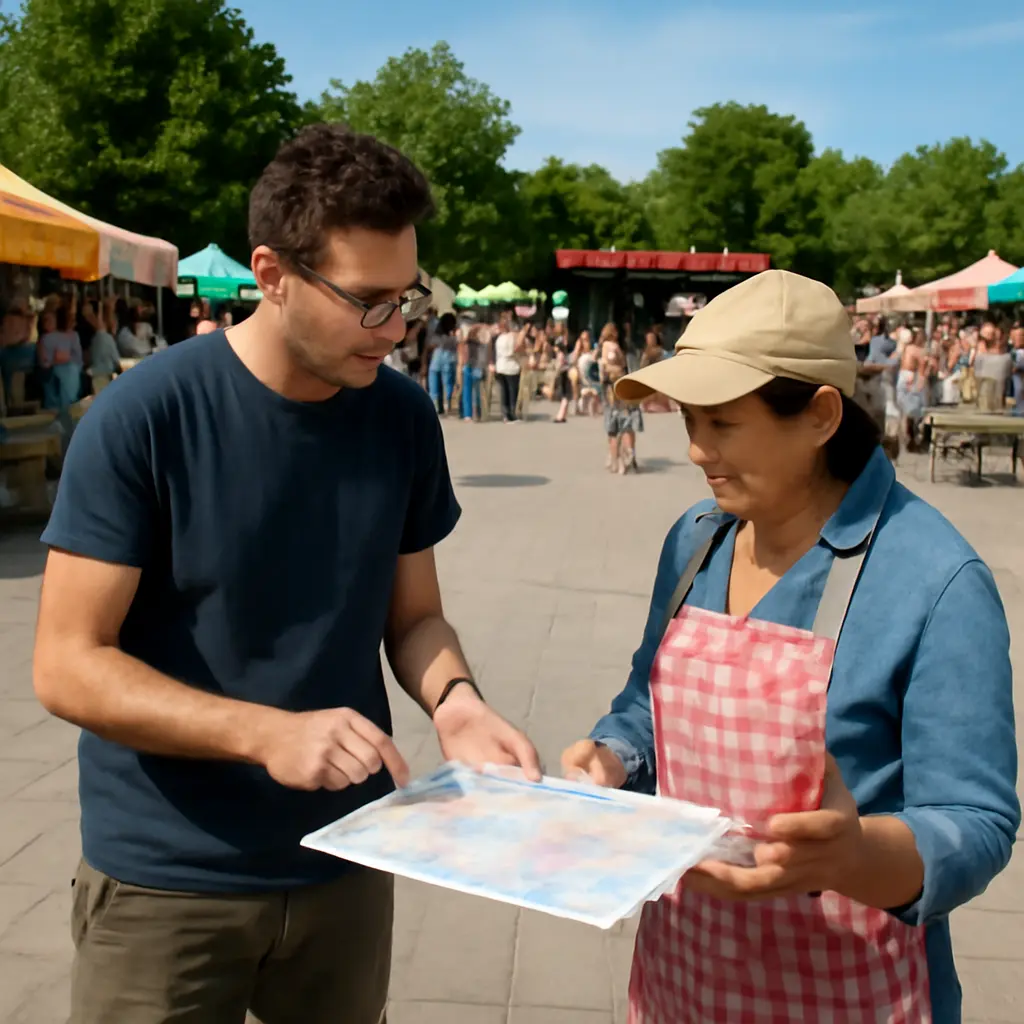
5 Ways Festivals Strengthen Ties Between Communities and Organizations
Festivals are organized public or private gatherings built around a shared cultural, artistic, religious, or community purpose. They strengthen ties between communities and organizations by creating face-to-face opportunities to build trust, share culture, develop partnerships, support local economies, and work toward common goals. These benefits matter at scale: the National Endowment for the Arts reported that 52% of U.S. adults attended an art exhibit, performance, or other arts activity in person in 2022, while festivals also bring together residents, nonprofits, businesses, and public agencies in one shared setting. Five connections are especially important: social belonging, cultural exchange, organizational partnerships, local economic activity, and civic collaboration.
Festivals Strengthen Social Ties Through Shared Participation
Social connection is the sense of belonging and mutual support people develop through relationships and shared experiences. Festivals can create this connection by bringing neighbors together outside their usual routines and giving them activities to enjoy, discuss, and help organize. The U.S. Surgeon General’s 2023 advisory on social connection describes social connection as important to individual and community well-being, while warning that isolation and loneliness carry serious health consequences.
The mechanism is practical: people meet while volunteering, attending performances, eating together, or taking part in family activities. Repeated encounters can turn casual familiarity into stronger relationships. Festival effects are not automatic, however; welcoming access, safe spaces, and opportunities for participation help make contact meaningful.
Shared activities create belonging
Belonging is the feeling of being accepted as part of a group. Community festivals support it through public rituals and low-barrier activities such as parades, outdoor concerts, food stalls, and craft workshops. A local arts nonprofit might host a children’s activity alongside a city library, for example, allowing families to engage with both organizations in an informal setting.
The National Endowment for the Arts’ 2022 Survey of Public Participation in the Arts found that 52% of U.S. adults attended an arts activity in person during the year. This national measure does not count festival attendance alone, but it illustrates the broad reach of in-person cultural participation that festivals can help enable.
Volunteering turns attendance into cooperation
Festival volunteering means contributing time and skills to tasks such as setup, translation, accessibility support, cleanup, or event stewardship. Shared responsibilities give residents and organizational staff a reason to cooperate and can develop practical skills and trust. Organizers can broaden participation by offering short shifts, clear role descriptions, and volunteer positions suited to different ages and abilities.
This social foundation also makes cultural exchange more likely: people who feel welcome are more inclined to listen, participate, and return.
Festivals Strengthen Cultural Ties Through Exchange
Cultural exchange is the sharing of traditions, stories, artistic practices, and knowledge between people or groups. Festivals can make that exchange visible through music, dance, food, language, crafts, and public storytelling. They can also give cultural organizations a platform to present community knowledge directly rather than having it interpreted by outsiders.
Cultural representation supports recognition
Representation means that a community’s identities and perspectives are meaningfully included in a shared event. A well-planned festival may feature performances selected by cultural groups, multilingual information, traditional foods, or demonstrations led by knowledge holders. The Smithsonian Center for Folklife and Cultural Heritage’s annual Smithsonian Folklife Festival, for instance, presents living cultural traditions through performances, demonstrations, and conversations with practitioners.
Representation is strongest when participating communities help make decisions, receive appropriate credit and compensation, and can set boundaries around sensitive traditions. These practices help organizations build relationships based on respect rather than treating culture as decoration.
Intergenerational learning passes knowledge forward
Intergenerational learning occurs when people of different ages exchange skills, memories, and perspectives. Festivals can connect elders, young people, schools, libraries, and cultural associations through oral-history booths, craft demonstrations, music lessons, or youth performances. Such activities allow organizations to share expertise while creating opportunities for residents to learn from one another.
Cultural exchange can then become a basis for lasting institutional cooperation, especially when organizations collaborate before and after the event rather than meeting only on festival day.
Festivals Strengthen Organizational Ties Through Partnerships
An organizational partnership is a cooperative relationship in which two or more groups coordinate resources, responsibilities, or expertise toward a shared purpose. Festivals often involve municipal agencies, arts organizations, schools, nonprofits, sponsors, vendors, and neighborhood groups. Working together on a time-bound event can help these partners learn how one another operates and identify future opportunities.
Cross-sector planning builds working relationships
Cross-sector collaboration brings together organizations from different fields, such as government, business, education, and the arts. A city agency may coordinate permits and safety, a nonprofit may recruit performers, a business association may support local vendors, and a school may provide volunteers or space. Defining roles early reduces confusion and gives each partner a clear way to contribute.
The National Coalition for Arts’ Preparedness and Emergency Response has highlighted how arts organizations and emergency-management partners can work together to support community resilience. A festival is not itself a resilience program, but its planning process can help organizations establish contacts, communication routines, and shared problem-solving experience.
Shared resources extend organizational capacity
Resource sharing means combining or exchanging assets such as venues, equipment, staff time, promotion, expertise, or funding. A community organization may lend its network and cultural knowledge while a municipality supplies infrastructure and a business contributes sponsorship or in-kind support. These arrangements can make activities possible that no single partner could deliver as effectively alone.
For example, a neighborhood festival can coordinate with a public library to offer reading activities, a health organization to provide information, and local artists to lead workshops. Written agreements, transparent budgets, and clear credit for partners help convert a one-time collaboration into a trustworthy relationship.
Festivals Strengthen Community–Business Ties Through Local Economic Activity
Local economic activity includes spending, paid work, contracts, and sales that benefit businesses and workers in a community. Festivals can bring visitors to commercial areas and create sales opportunities for food vendors, artisans, performers, hotels, and nearby shops. The scale of the impact depends on attendance, visitor spending, event costs, and how much procurement stays local.
Local vendors connect commerce with community identity
Vendor participation means giving local businesses and makers a fair opportunity to sell goods or services at an event. Food and craft markets can introduce attendees to neighborhood enterprises while allowing organizations to showcase local products and traditions. Organizers can strengthen the benefit by setting affordable vendor fees, publicizing participating businesses, and making application procedures accessible to small or first-time vendors.
The U.S. Bureau of Economic Analysis estimates that arts and cultural production contributed $1.1 trillion to U.S. gross domestic product, or 4.3% of GDP, in 2022. This figure covers the wider arts and cultural sector, not festivals alone, but it demonstrates the economic significance of cultural activity in which festivals participate.
Visitor spending can support nearby businesses
Visitor spending includes money spent on admission, food, transport, lodging, and shopping during an event. Those purchases may benefit businesses beyond the festival site, especially when organizers coordinate with nearby restaurants, hotels, and retailers. The U.S. Travel Association reported that domestic and international travelers spent $1.3 trillion in the United States in 2023; this is a national travel measure, not a festival impact estimate, and should not be presented as money generated by festivals.
To assess a particular event, organizers can track attendance, vendor revenue, local purchasing, visitor origins, and costs. A simple chart comparing local vendor sales or visitor spending across years can show whether economic benefits are reaching the intended businesses.
Festivals Strengthen Civic Ties Through Shared Goals
Civic collaboration is coordinated action by residents, organizations, and public institutions on issues that affect a community. Festivals can support it by creating a visible gathering place where people encounter public services, learn about local initiatives, and contribute ideas. Their civic value depends on meaningful access and follow-up: an event can invite participation, but lasting change requires partners to act on what they hear.
Public agencies and residents build trust through contact
Public engagement is the process of involving residents in decisions, services, or conversations that affect them. Festivals offer an approachable venue for agencies to share information about public health, transport, emergency preparedness, or community programs. Staff can also listen to resident concerns in a setting less formal than a hearing or office appointment.
The Centers for Disease Control and Prevention’s Crisis and Emergency Risk Communication guidance emphasizes the importance of credible sources and clear, audience-centered communication. While festival outreach is not necessarily crisis communication, the same principles—plain language, trusted messengers, and attention to audience needs—can improve public-information activities.
Accessible design broadens participation
Accessible festival design reduces barriers related to disability, language, cost, transport, age, and safety. Examples include step-free routes, accessible toilets, quiet areas, captioning or interpretation, clear transit information, and free or low-cost admission. The U.S. Census Bureau reported that 13.4% of the U.S. civilian noninstitutionalized population had a disability in 2022, underscoring why accessibility should be treated as a core planning responsibility rather than an optional extra.
Inclusive design helps ensure that community organizations and public agencies hear from a wider range of residents. It also strengthens the credibility of a festival’s message that the event belongs to the whole community.
Conclusion: Festivals Turn Brief Encounters Into Lasting Ties
Festivals strengthen social ties through shared participation, cultural ties through exchange and representation, organizational ties through partnerships, economic ties through local commerce, and civic ties through public engagement. Evidence on arts participation, cultural-sector contributions, travel spending, social connection, and disability prevalence helps explain why thoughtful festival planning matters, while also reminding organizers not to mistake broad national statistics for an individual event’s measured impact.
Organizations planning a festival can start by setting shared goals with community partners, budgeting for accessibility and fair compensation, supporting local vendors, and measuring outcomes such as repeat participation, volunteer involvement, partner satisfaction, and local spending. The most valuable next step is to treat the festival not as a one-day performance, but as the beginning of relationships that continue throughout the year.
Sources: U.S. Surgeon General, Our Epidemic of Loneliness and Isolation: The U.S. Surgeon General’s Advisory on the Healing Effects of Social Connection and Community, 2023, https://www.hhs.gov/sites/default/files/surgeon-general-social-connection-advisory.pdf; National Endowment for the Arts, Arts Participation Patterns in 2022: Highlights from the Survey of Public Participation in the Arts, https://www.arts.gov/impact/research/publications/arts-participation-patterns-2022-highlights-survey-public-participation-arts; Smithsonian Center for Folklife and Cultural Heritage, Smithsonian Folklife Festival, https://festival.si.edu/; National Coalition for Arts’ Preparedness and Emergency Response, About NCAPER, https://www.ncaper.org/; U.S. Bureau of Economic Analysis, Arts and Cultural Production Satellite Account, U.S. and States, 2022, https://www.bea.gov/news/2024/arts-and-cultural-production-satellite-account-us-and-states-2022; U.S. Travel Association, U.S. Travel Answer Sheet, https://www.ustravel.org/answersheet; Centers for Disease Control and Prevention, Crisis and Emergency Risk Communication, https://emergency.cdc.gov/cerc/; U.S. Census Bureau, Disability Characteristics, American Community Survey, https://data.census.gov/.