
World Music Festival Curation Balancing Cultural Authenticity With Audience Accessibility
A world music festival is a live event that presents music rooted in diverse cultural traditions, often alongside contemporary and cross-cultural performances. Curating one well means pairing cultural integrity with an inviting audience experience—not treating authenticity and accessibility as opposites. UNESCO’s 2003 Convention for the Safeguarding of the Intangible Cultural Heritage emphasizes communities’ role in sustaining their living heritage; meanwhile, audience research from the National Endowment for the Arts shows that live music participation is a substantial part of U.S. arts engagement. The practical challenge is to build a program with community authority, meaningful context, varied entry points, fair compensation, and accessible production. This article explains those curation principles, offers examples and evaluation measures, and identifies questions organizers should ask before booking.
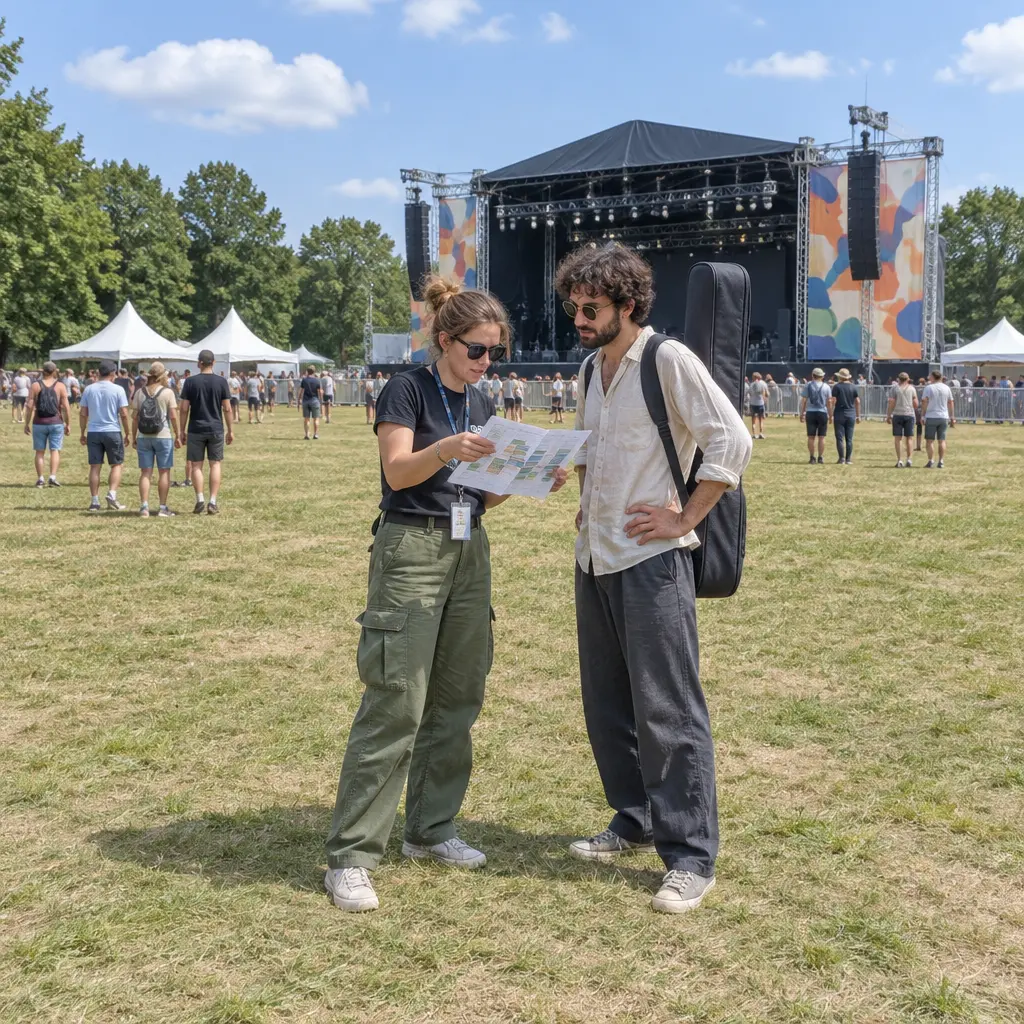
Festival curation balances cultural authenticity and audience accessibility
Curation is the process of selecting, arranging, contextualizing, and presenting performers and related experiences. In a world music festival, cultural authenticity is not a single sound or an outsider’s test of whether an artist is “traditional.” It is better understood as the integrity of a cultural expression as interpreted and represented by the people and practitioners connected to it. Audience accessibility means making that expression approachable through clear information, welcoming design, practical access, and programming that gives newcomers ways to listen without flattening cultural differences.
The balance matters because festivals shape public understanding as well as entertainment. UNESCO’s 2003 Convention defines intangible cultural heritage as practices, expressions, knowledge, and skills that communities recognize as part of their heritage, and stresses that safeguarding must be compatible with human rights and mutual respect. That framework supports a key curatorial principle: living traditions can change, but organizers should not misrepresent them, extract them from their context, or imply that one performer speaks for an entire culture.
There is also a practical case for access. The National Endowment for the Arts’ Survey of Public Participation in the Arts tracks U.S. participation in live music and other arts activities, demonstrating that attendance is shaped by more than artistic interest: cost, location, information, and opportunity also matter. Because festivals do not all collect comparable attendance or demographic data, organizers should avoid treating a single industry-wide audience figure as proof of inclusion. Instead, they can set measurable local goals for affordability, accessibility, community participation, and audience learning.
Cultural authenticity in festival curation
Cultural authenticity in festival curation is a relationship-based standard for presenting music with accuracy, context, and respect for the agency of its practitioners. UNESCO’s heritage framework offers a useful reference: heritage is living and community-recognized, rather than a fixed artifact judged solely by institutions or audiences. In practice, authentic curation does not require performers to reproduce an imagined, unchanged past. It requires organizers to describe the music honestly, consult relevant knowledge-holders, and let artists define their own work.
This approach includes several related forms of curation: traditional or community-based presentation; contemporary and hybrid work; diaspora programming; and collaborations across genres or cultures. These categories overlap. A contemporary electronic arrangement may draw on a community tradition, while a heritage ensemble may be innovating within its own musical language. The curator’s responsibility is to explain the relationship rather than use labels such as “pure,” “exotic,” or “ancient” as shortcuts.
Community authority and shared decision-making
Community authority means that artists and relevant cultural practitioners have meaningful influence over how their work is selected, described, recorded, and promoted. Consultation should begin before booking decisions are final, particularly when a program involves sacred, restricted, politically sensitive, or community-specific material. A festival can establish an advisory group, invite artists to review biographies and program notes, and agree in advance on photography, filming, and archival use.
The UNESCO Convention places communities at the center of identifying and safeguarding intangible heritage. That principle does not mean a community is internally uniform or that one adviser can authorize every representation. Organizers should ask who has the relevant knowledge, recognize disagreement where it exists, and compensate consultants for their labor. Where community protocols limit public presentation, the festival should respect those limits rather than assume that a performance is available simply because it can attract an audience.
Context, repertoire, and accurate framing
Contextual framing gives audiences enough information to understand what they are hearing without turning a performance into a lecture. Useful material includes the music’s regional or linguistic roots, its social setting, the instruments involved, the artist’s own account of the work, and any relevant history of migration or adaptation. The Smithsonian Center for Folklife and Cultural Heritage’s festival practice offers a model for connecting performances with demonstrations, interviews, and cultural interpretation rather than presenting music as a detached sound object.
Accuracy also requires restraint. A short stage introduction should not imply that a complex genre represents every person from a country or ethnic group. Program notes can distinguish an artist’s individual choices from broader community practices and can identify contemporary influences without treating them as evidence of diminished authenticity. Provide translations where appropriate, confirm spellings and pronunciations with artists, and let performers decide how much personal or cultural explanation they wish to offer.
Fair compensation, consent, and cultural rights
Fair compensation is part of responsible representation because a festival’s cultural value is created through artists’ expertise, preparation, and performance. Contracts should state fees, travel and lodging arrangements, cancellation terms, recording permissions, and how promotional material may be reused. If the event plans to stream or archive a performance, obtain specific informed consent and agree on any licensing or revenue-sharing terms before the event.
The World Intellectual Property Organization explains that traditional cultural expressions can include music, designs, performances, and other forms of cultural expression, while legal protection varies across jurisdictions and circumstances. Organizers should therefore avoid assuming that material is free to reproduce because it is traditional or publicly performed. Clear agreements and community consultation reduce the risk of unauthorized recording, misleading attribution, and commercial use that artists did not approve.
Audience accessibility in festival design
Audience accessibility is the removal of practical, sensory, informational, and social barriers that prevent people from attending or engaging. It includes, but extends beyond, disability access. A well-curated festival helps newcomers find a way into unfamiliar music while preserving the depth and specificity that make each performance meaningful. The most effective strategies are built into planning rather than added as last-minute accommodations.
Programming pathways and listening entry points
Programming pathways are deliberate ways of helping audiences navigate a schedule. Organizers can group performances by theme, instrument, region, or artistic connection, while avoiding the implication that these categories are definitive. A short introductory set, artist conversation, instrument demonstration, or guided listening session can give first-time listeners helpful context. A festival might place an accessible, high-energy performance near a more specialized set, but should avoid using one culture’s music merely as a gateway or novelty for another.
The Smithsonian Folklife Festival illustrates how stages, demonstrations, discussions, and interpretive materials can create multiple points of engagement. A festival can use the same principle at different scales: concise stage introductions for casual listeners, longer interviews for curious attendees, and detailed program notes for those who want further study. These options make learning available without requiring every audience member to engage in the same way.
Price, location, language, and disability access
Practical accessibility concerns whether people can afford to attend, reach the site, understand essential information, and use the event space. Options include free or reduced-price tickets, transit information, clear schedule updates, multilingual materials, step-free routes, accessible restrooms, seating choices, captioning for spoken content, and quiet areas. The U.S. Department of Justice’s guidance on the Americans with Disabilities Act explains requirements for accessible public accommodations; festivals should consult applicable rules and people with disabilities during design rather than relying on minimum compliance alone.
The National Endowment for the Arts’ participation research is useful context because it treats arts engagement as a matter of both interest and opportunity. For individual festivals, the strongest evidence comes from local evaluation: track ticket price bands, attendance by event type, use of access services, audience feedback, and barriers reported by non-attendees. Collect demographic information only when it is necessary, voluntary, and handled with appropriate privacy protections.
Welcoming communication without oversimplification
Welcoming communication uses clear language while preserving cultural specificity. Explain unfamiliar terms, provide accurate pronunciation guides, identify language and place where relevant, and offer a concise “what to listen for” note. Avoid exoticizing copy that presents artists as mysterious representatives of a distant culture. Promotional language should describe the performer’s actual practice and, where possible, use the artist’s preferred wording.
Accessibility also includes social comfort. A clear schedule, visible wayfinding, informed staff, and explicit behavioral expectations can help first-time attendees feel that they belong. The goal is not to simplify the music itself; it is to remove avoidable confusion around the event so that listeners can give their attention to the performance.
Building a balanced program and measuring its impact
A balanced program combines artistic range with a transparent curatorial rationale. Rather than selecting acts only by nationality or genre label, organizers can consider artistic quality, community relationships, geographic and generational range, local relevance, and the conditions needed for each performance to succeed. A written policy helps explain how these criteria guide invitations and prevents diversity from becoming a checklist detached from artistic judgment.
A practical curation framework
- Define the festival’s purpose and identify the communities, artists, and audiences it intends to serve.
- Consult practitioners early and establish who can advise on repertoire, framing, protocols, and permissions.
- Build a program that includes traditional, contemporary, and hybrid practices without presenting any one as more legitimate by default.
- Budget for artist fees, travel, interpretation, access services, consultation, and appropriate production needs.
- Provide layered interpretation, from brief stage introductions to optional deeper resources.
- Evaluate outcomes with artists and audiences, then publish what the festival learned and what it will change.
These steps connect cultural integrity to operational decisions. For example, a festival may book an ensemble whose repertoire includes material with specific community protocols. Early consultation can identify which pieces are suitable for public performance, whether recording is permitted, and what contextual information the musicians want shared. The same planning process can arrange accessible seating, translated materials, and a fair contract before the event is advertised.
Evaluation indicators and a suggested scorecard
Evaluation should examine both audience experience and artist-community outcomes. Useful indicators include whether artists felt accurately represented, whether agreed permissions were followed, whether access services were available as promised, and whether attendees could find program information. Attendance and repeat visits provide useful signals but cannot, by themselves, demonstrate cultural respect or equitable participation.
A simple scorecard can report the number of paid performers, the proportion of the budget allocated to artists and access, the availability of translated or accessible materials, and feedback from artists and attendees. Results should be interpreted in context: a low survey response rate, for example, may limit conclusions. A chart accompanying the article could compare annual targets with results for artist compensation, access provision, audience learning, and community satisfaction; it should label the data source and avoid implying that unlike measures can be reduced to one authenticity score.
Conclusion: Make access a pathway to cultural understanding
World music festival curation works best when cultural authenticity is grounded in community authority, accurate context, consent, and fair compensation, while audience accessibility is supported through thoughtful programming, practical access, and welcoming communication. UNESCO’s heritage principles, Smithsonian Folklife practice, arts participation research, and disability-access guidance all point toward a common lesson: meaningful engagement depends on both respectful representation and the conditions that let people participate.
Festival organizers should begin with consultation, budget for access and artist labor, explain programming choices clearly, and evaluate outcomes with the people most affected. Readers and event teams can explore UNESCO’s intangible cultural heritage framework, the Smithsonian Center for Folklife and Cultural Heritage, National Endowment for the Arts participation research, and U.S. Department of Justice accessibility guidance as starting points for deeper planning.
Sources: UNESCO, Convention for the Safeguarding of the Intangible Cultural Heritage, 2003, https://ich.unesco.org/en/convention; UNESCO, Basic Texts of the 2003 Convention for the Safeguarding of the Intangible Cultural Heritage, https://ich.unesco.org/en/basic-texts-00503; National Endowment for the Arts, Survey of Public Participation in the Arts, https://www.arts.gov/impact/research/arts-data-profile-series/adp-30; Smithsonian Center for Folklife and Cultural Heritage, Smithsonian Folklife Festival, https://festival.si.edu/; World Intellectual Property Organization, Traditional Cultural Expressions, https://www.wipo.int/en/web/traditional-knowledge/traditional-cultural-expressions; U.S. Department of Justice, ADA Requirements: Effective Communication, https://www.ada.gov/resources/effective-communication/